
Pro Tips
Photo Management
7 Methods to Store Site Photos the Right Way
Joseph, Co-founder

Image Credit:
Pexels
The right way to store construction site photos is in one shared project album, tagged when the photo is taken and pinned to its location on the drawing. Set up like that, anyone on the team can find a photo in seconds instead of scrolling through chat groups. The seven methods below get you there, in the order most site teams adopt them.
Why chat groups and phone galleries stop working
Chat groups are fine for the first week of a project. By month three the group has thousands of messages, half the photos have no caption, and the person who took the one you need has rotated to another site.
The time cost is measurable. In FMI and PlanGrid's 2018 survey of 599 construction leaders, staff spent 5.5 hours a week looking for project data, and 52% of rework worldwide was traced to poor project data and miscommunication.
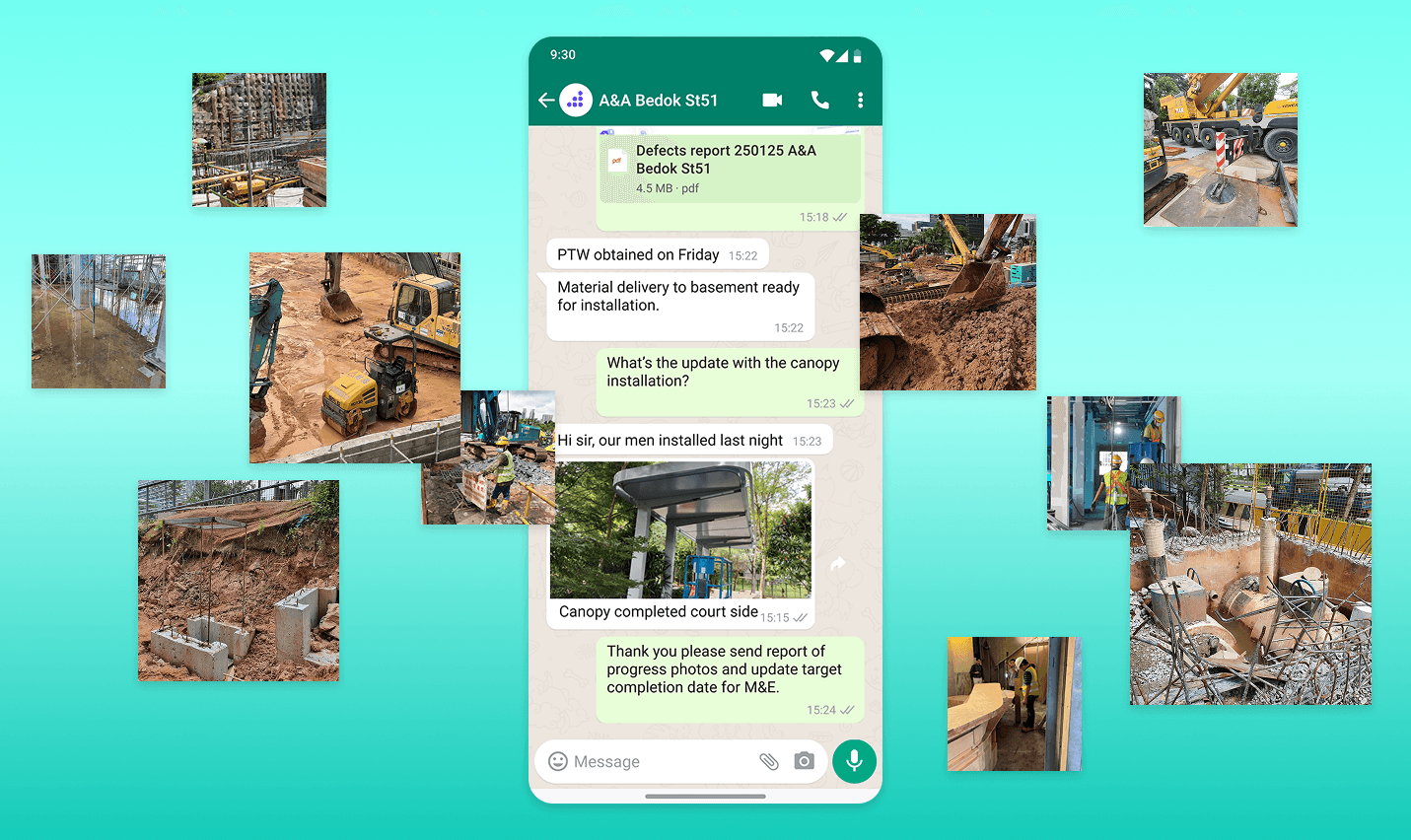
Problem with chat groups | What it costs on site |
|---|---|
No search by location or trade | 15 to 30 minutes of scrolling for one photo, or a phone call to site |
No plan location | "Which toilet is this?" messages, repeat site trips, wrong rectification |
Photos live on personal phones | When staff leave, their records leave with them |
Compression and lost originals | Weaker evidence when a claim or defect is disputed |
No link to follow-up | Defects get reported but nobody can see if they were closed |
The 7 methods
1. Keep one album per project, not per person
Every photo for the project goes into a single shared album that the whole team can see: main contractor, subcontractors, consultants and the client's representative. Personal galleries and private chats are where records go missing. In Otus, seats are unlimited per project, so nobody is left out to save on licences.
2. Tag at capture, not afterwards
Tagging later never happens. Agree a short tag library before work starts and apply it on site: level, zone or grid, trade and status (for example #L03, #M&E, #defect). Ten to fifteen tags covers most projects. We cover how to design one in why tagging is the backbone of site documentation.
3. Pin every photo to the plan
A tag tells you the level. A pin tells you the exact spot and, in Otus, the direction the camera was facing. That matters when the same column gets photographed from four sides over six months. See how to record site walk photos on plan.
4. Let the date and author be automatic
Renaming files by hand (SiteA_20260601_MEP.jpg) breaks the moment someone forgets. Use a tool that stamps the date, time and author on every photo automatically, then filter by them when you need to.
5. Separate observations from issues
Most photos are records: progress, conditions, completed work. Some need action. Raise those as issues with an owner and a due date, so the photo leads to a closed item instead of a forgotten message. Otus lets the assignee close the issue with a photo of the fix. More in Otus Issues.
6. Shoot before and after from the same spot
Hidden works (rebar, conduits, waterproofing, ceiling services) are only visible for days. Photograph them before they are covered, then again after, from the same pin and angle. That pair settles more arguments than any written description. See before and after photos in construction.
7. Build reports from the album
If photos are already tagged and pinned, a weekly report is a filter and an export, not an evening of copying images into Word. Otus generates PDF and PowerPoint reports from selected photos, with the plan location included. See how to make site reports faster.
Method | What it fixes | Set-up effort |
|---|---|---|
1. One album per project | Lost records when staff leave | Invite the team once |
2. Tag at capture | Search by level, trade or status | Agree 10 to 15 tags |
3. Pin to plan | "Where was this taken?" | Upload the current drawings |
4. Automatic date and author | Manual file naming | None |
5. Observations vs issues | Defects that never get closed | Assign owners |
6. Before and after | Disputes over hidden works | Habit on site walks |
7. Reports from the album | Hours of report formatting | Pick a template |
What a site day looks like with and without a system
Morning. The office asks for the Level 2 waterproofing photo before the tiler starts. Without a system, someone scrolls 400 messages, calls the supervisor and pulls a worker off his task to take a new photo. With one, you open the plan, tap the Level 2 pin and send it.
Midday. A defect is spotted. Without a system it is a photo in a group with no location. With one, it is an issue pinned to the plan, assigned to the subcontractor, with a voice note transcribed into the description.
End of day. Without a system, the daily report waits until evening. With one, it is generated from the day's tagged photos in a few minutes.
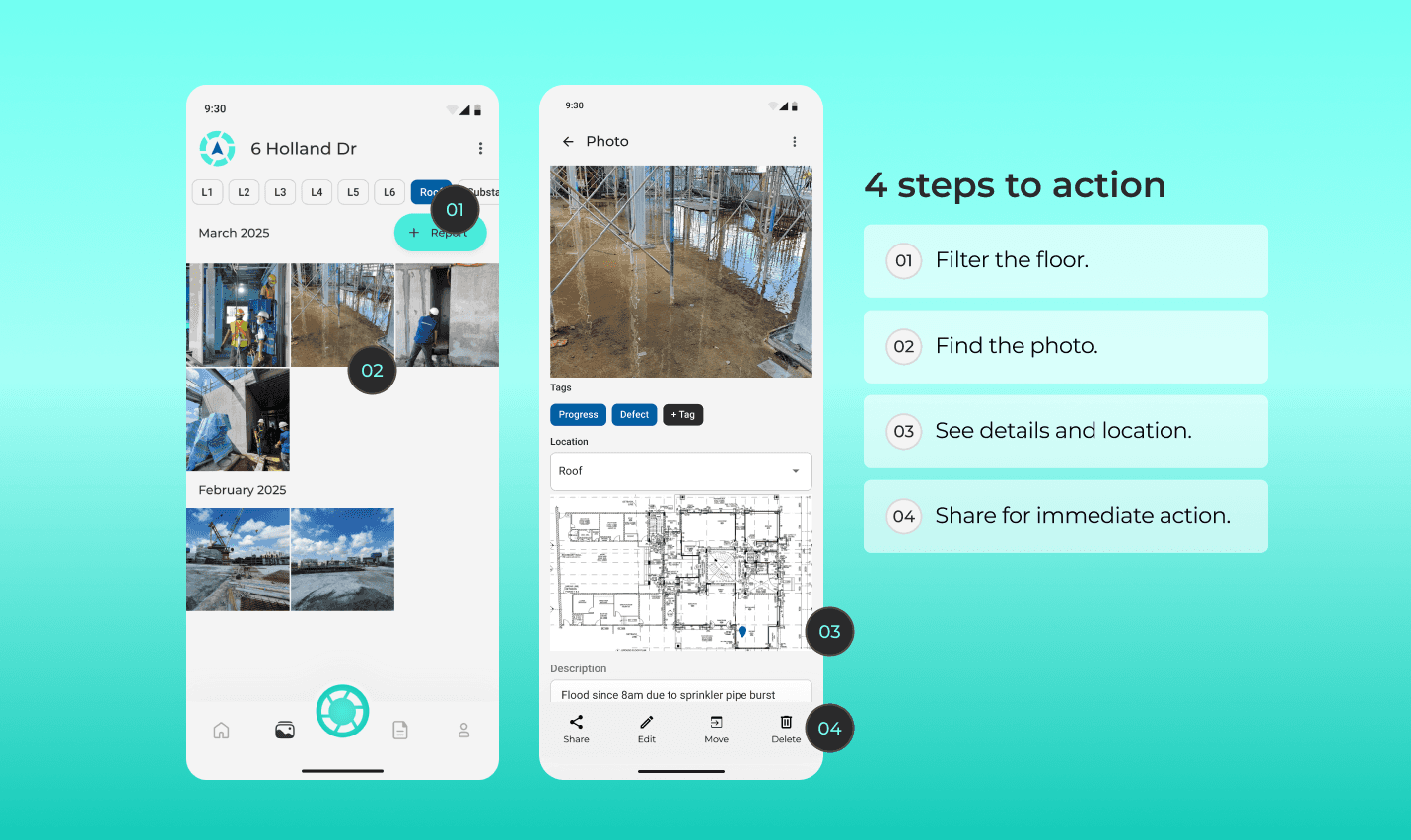
Teams using Otus have cut photo retrieval time by 94% and recovered 60 to 90 admin hours a month, as we describe in setting up site photo documentation on day 1.
Chat groups vs a dedicated site photo app
Chat groups and phone galleries | Dedicated site photo app | |
|---|---|---|
Finding a photo | Scroll or ask someone | Filter by tag, author, date or plan location |
Location | Described in text, if at all | Pinned on the drawing with camera direction |
Ownership | Each person's phone | One project album that stays with the project |
Follow-up | Separate spreadsheet or notebook | Issues assigned and closed in the same record |
Reporting | Rebuilt manually | Exported to PDF or PowerPoint |
No signal (basements, cores) | Messages queue or fail | Captured offline, synced when back online |
How to move a live project off chat groups
Upload the current drawing set and replace sheets as revisions come in, so everyone pins to the latest plan.
Invite everyone who takes photos, including foremen and subcontractor supervisors.
Agree the tag library at the next coordination meeting and keep it short.
Don't migrate the old chat history. Export it once for the record, then start capturing in the album from a set date.
Run the next site meeting from the album, so the team sees it replace the chat group in practice.
FAQ
What is the best way to store construction site photos?
In one shared project album where each photo carries a date, author, tags and a location on the drawing. Cloud folders and chat groups store the image but lose that context.
Is WhatsApp good enough for site photos?
It works for quick coordination. It is a poor record: no plan location, no search by trade or level, compressed images, and photos stay on personal phones when staff leave.
How should I name or tag site photos?
Skip manual file names. Tag by level or zone, trade and status at the moment of capture, and let the app add the date and author automatically.
How long should site photos be kept?
At least until defects liability and any claims are settled. In Singapore the general limitation period for contract claims is six years under the Limitation Act, so many teams keep project records for six years or more after completion. Check your contract and your legal advisers for your own project.
Can I capture photos where there is no signal?
Yes, in Otus. Photos are captured offline in basements and cores and sync automatically when the phone reconnects.
Start with one project
The Otus Free plan covers up to 3 projects and 500 photos per project, enough to run a live project through all seven methods. See pricing, or read next: what to capture at each construction stage.